How do we measure pain?
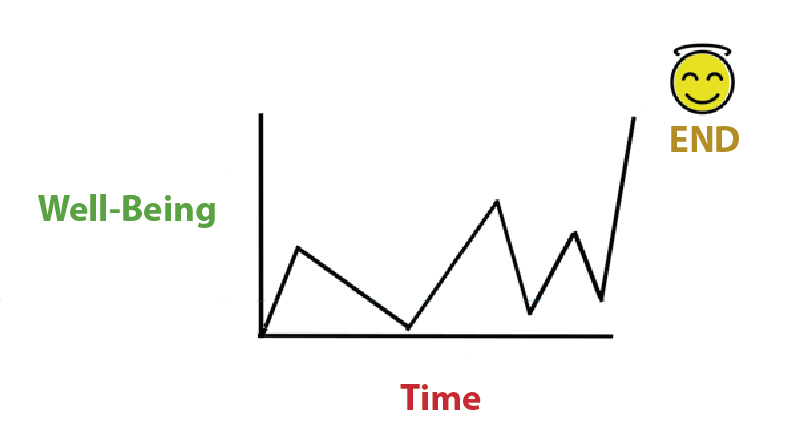
In 1993 and 1996 two researchers, Redelmeier and Kahneman found a new psychological principle. After painful medical procedures, patients rated the overall pain as a combination of the worst pain during the procedure and the pain at the very end. Those of you who have had kidney stones will know the type of pain being treated. If the pain was much less at the end, even briefly, the patients tended to think the average pain for the whole time was much much less than it actually was. This is called the “Peak-End effect” and has been confirmed many times (but also not confirmed a few times).
The opposite effect was also true – if the pain was very severe right at the end patients thought the average level of pain was very high, much higher than it actually was.
The effect has been cited in other scientific papers about 1500 times, which makes it rather famous. (Kahneman himself became widely recognised for some unrelated later research about economics, which earned him a Nobel Prize.)
One of the everyday uses of the principle is widely seen in the retail industry today to make sure the last experiences of a shopper in a store are pleasant. Hence the somewhat irritating and ritualistic but universal, “Have a good day!” However it is wise to take this as a blessing! It looks like it does help swing our general evaluation of the day into the positive.
What do you think a final resurrection and Heaven would do to your rating of negative experiences in your life on earth?