Wine Diamonds
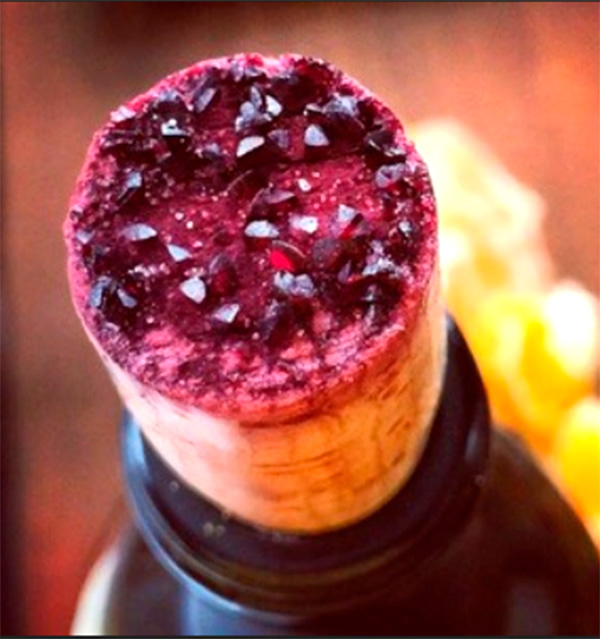
A frequent theme in Scripture is that of a cup with bitter contents which the "wicked" must drain to the dregs. Sometimes a prophet proffers the cup, sometimes it seems to be from the hand of God himself. But it actually reflects the chemistry of wine, at least in the older manufacturing process. The dregs are nasty.
A theme in Scripture is that when Jesus was crucified he drank that bitter cup. He prayed beforehand to God to remove the cup if possible. But it wasn’t.
However ,there was a hidden reward at the bottom of the cup, known to winemakers as long as wine has been made – which means a few thousand years.
Winemakers noted red crystals in the sediment of red wine (and purer clear crystals in white wine). They are mentioned in Roman times in the writings of Pliny, and given the name “tartar” in medieval times. The Swedish chemist Carl Scheele in the late 1700’s found they were Potassium tartrate, which you may know as “cream of tartar” used in baking. When winemaking become a modern industry, marketers in the early 1900’s began calling these crystals “wine diamonds”. “Diamonds in wine” sounded really good! It was used less as a marketing feature after about 1950 when wine was sold only after the sediment was removed .
Perhaps the “wine diamonds” at the bottom of the cup of Jesus were his followers! Which raises the question, are we among the sediment or the diamonds?